RFID Asset Tracking: How It Works, What It Costs, and When to Use It
Every warehouse manager has the same problem: assets disappear. Tools walk off job sites. Pallets get misrouted. Equipment sits idle because nobody knows where it is. RFID has been the default answer to this problem for two decades. But the technology has real trade-offs that vendors don't always explain upfront.
This guide covers how RFID inventory systems actually work, what they cost in practice, and when alternatives like BLE or Apple Find My make more sense.
How RFID Works
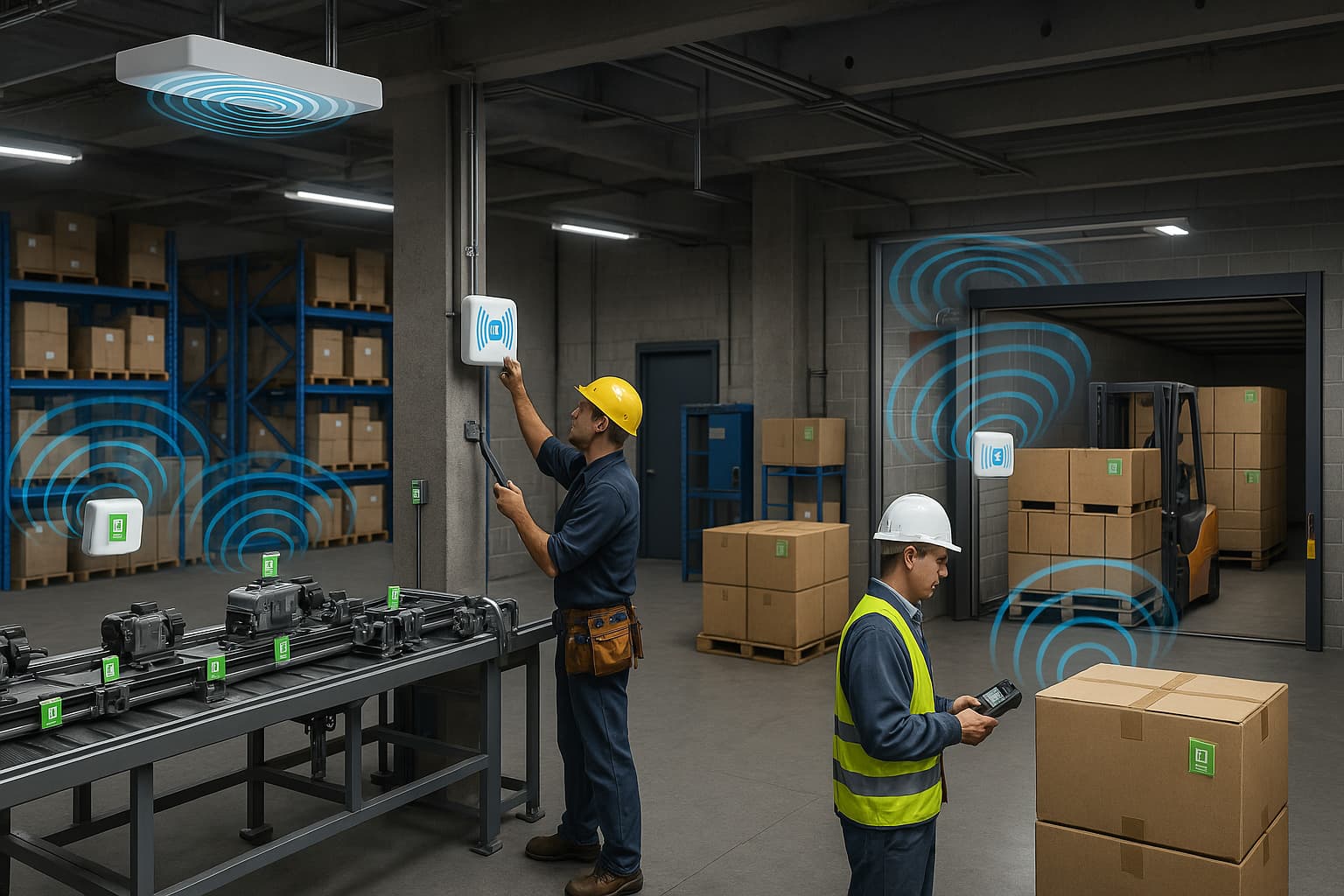
RFID (Radio Frequency Identification) uses radio waves to identify tagged objects without line of sight. The system has three components:
- RFID tags attached to assets. Each tag contains a microchip storing a unique identifier and an antenna.
- RFID readers that emit radio frequency signals. When a tag enters the reader's field, the RF energy powers the tag's chip (for passive tags) or triggers a response (for active tags).
- Software that processes tag reads into usable inventory or location data.
The key advantage over barcodes: no line of sight required. A reader can scan 100+ tags per second through cardboard boxes, plastic bins, and most non-metallic materials. A barcode scanner needs to see each label individually. This speed difference is why RFID dominates high-volume inventory operations.
Active vs Passive RFID: Costs and Trade-offs
The distinction between active and passive RFID is the single most important decision in any RFID deployment. They solve fundamentally different problems.
Passive RFID
Passive tags have no battery. They harvest energy from the reader's RF signal, which limits their range but makes them cheap and maintenance-free.
- Tag cost: $0.10-3 per tag
- Read range: A few inches (HF/NFC) to 30 feet (UHF)
- Battery life: Indefinite (no battery)
- Read speed: 100-1,000+ tags per second
- Best for: Inventory counts, supply chain tracking, access control, retail
Passive RFID is what most people mean when they say "RFID tags for inventory management." A warehouse worker with a handheld reader can count an entire pallet in seconds instead of scanning individual barcodes. Retail stores use passive UHF tags to count every item on the floor in under an hour.
Active RFID
Active tags have a built-in battery and transmit their own signal. This gives them far greater range but at 10-100x the cost.
- Tag cost: $25-100+ per tag
- Read range: Up to 300+ feet
- Battery life: 3-5 years (then replace the tag)
- Read speed: Continuous beacon (every 1-10 seconds)
- Best for: Real-time location systems (RTLS), high-value assets, vehicles
Active RFID is used in hospitals tracking infusion pumps, airports tracking ground equipment, and manufacturing plants tracking work-in-progress across large facilities.
Infrastructure Costs
Tags are the visible cost. Infrastructure is where budgets break:
| Component | Cost Range |
|---|---|
| Passive RFID tags | $0.10-3 each |
| Active RFID tags | $25-100+ each |
| Fixed readers | $500-3,000 each |
| Handheld readers | $1,000-5,000 each |
| Portal readers (doorways) | $2,000-5,000 each |
| Antennas | $100-500 each |
| Software/middleware | $5,000-50,000/year |
| Total facility deployment | $10,000-100,000+ |
A mid-size warehouse with 4 dock doors, 2 staging areas, and 6 aisles typically needs 12-20 readers, 30+ antennas, and cabling throughout the facility. Installation alone runs $5,000-15,000.
RFID for Inventory Management
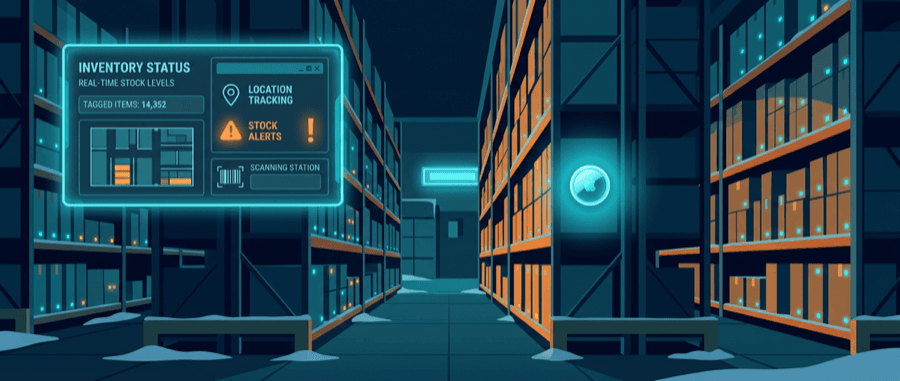
RFID's strongest use case is high-volume inventory management where speed and accuracy matter more than real-time location.
Warehouse Operations
A distribution center processing 10,000 SKUs can use RFID to:
- Receiving: Scan an entire pallet of tagged items in 2-3 seconds as it passes through a dock door portal. Manual barcode scanning takes 15-30 minutes per pallet.
- Cycle counting: Walk aisles with a handheld reader, scanning 25x faster than barcode scanning. One worker can count a 50,000 sq ft warehouse in hours instead of days.
- Shipping verification: Confirm every item in an outbound shipment matches the order as the pallet passes through an exit portal. Catch picking errors before they leave the building.
The numbers: RFID inventory counts achieve 99.9% read accuracy. Manual barcode counts average 80-85% accuracy due to missed scans and human error. For a company shipping 1,000 orders per day, that accuracy gap means 150-200 fewer errors daily.
Retail Inventory
Retailers like Zara and Walmart use passive UHF RFID to count every item in a store. A worker with a handheld reader walks the floor and counts 10,000+ items in 30-45 minutes. Without RFID, a full physical count takes a team of people an entire overnight shift.
The ROI is straightforward: better inventory accuracy means fewer stockouts, which means more sales. Retailers report 2-8% revenue increases from RFID-driven inventory accuracy improvements.
Manufacturing
Manufacturers embed RFID tags in work-in-progress to track items through production stages. When a part passes a reader at each station, the system logs progress automatically. This replaces manual data entry, reduces WIP inventory by giving visibility into bottlenecks, and provides traceability for quality issues.
RFID Tool Tracking
RFID tool tracking is a specific application that's gained traction in construction, aerospace, and manufacturing. The setup works like this:
- Every tool gets an RFID tag (usually a rugged on-metal tag, $3-10 each).
- Portal readers are installed at tool crib entrances and exits.
- Workers carry an RFID badge or are assigned to a job.
- When a worker walks through the portal with tools, the system logs which tools left, who took them, and when.
- At the end of a shift, the system flags tools that haven't been returned.
This eliminates paper sign-out sheets and catches tool loss within hours instead of weeks. Aerospace manufacturers use it for FOD (Foreign Object Debris) prevention, ensuring every tool that enters a work zone also leaves it.
The limitation: RFID tool tracking only knows a tool passed through a specific doorway. It doesn't tell you where the tool is right now. If a worker takes a tool to a job site 30 miles away, the system shows "checked out" but not the tool's current location.
The Honest Limitations of RFID
RFID vendors emphasize the technology's strengths. Here's what they skip:
Metal and liquid interference. Standard RFID tags fail on metal surfaces and near liquids. The RF signal reflects off metal and is absorbed by water. On-metal tags exist but cost 3-10x more. If you're tracking metal tools, pipes, or equipment with fluid reservoirs, expect complications.
No real-time location. Standard RFID provides checkpoint data, not continuous location. You know an asset passed a reader at 2:47 PM. You don't know where it is at 3:15 PM. True real-time RFID tracking (active RTLS) requires a dense grid of readers and costs $50,000+ per facility.
Infrastructure dependency. RFID only works within range of your readers. Assets that leave your facility, move between sites, or operate in the field are invisible. You can't track a generator on a remote job site with RFID.
Maintenance burden. Readers need power, network connectivity, and periodic calibration. Active tags need battery replacement every 3-5 years. Antennas get damaged. A 20-reader installation requires ongoing IT support.
Read collisions at scale. When hundreds of tags are in a reader's field simultaneously, read collisions can cause missed reads. Anti-collision protocols handle this, but read accuracy drops slightly in dense environments.
RFID vs BLE vs GPS vs Apple Find My
Each tracking technology solves a different version of the "where is my stuff?" problem. The right choice depends on what you're tracking, where, and how much you're willing to spend on infrastructure.
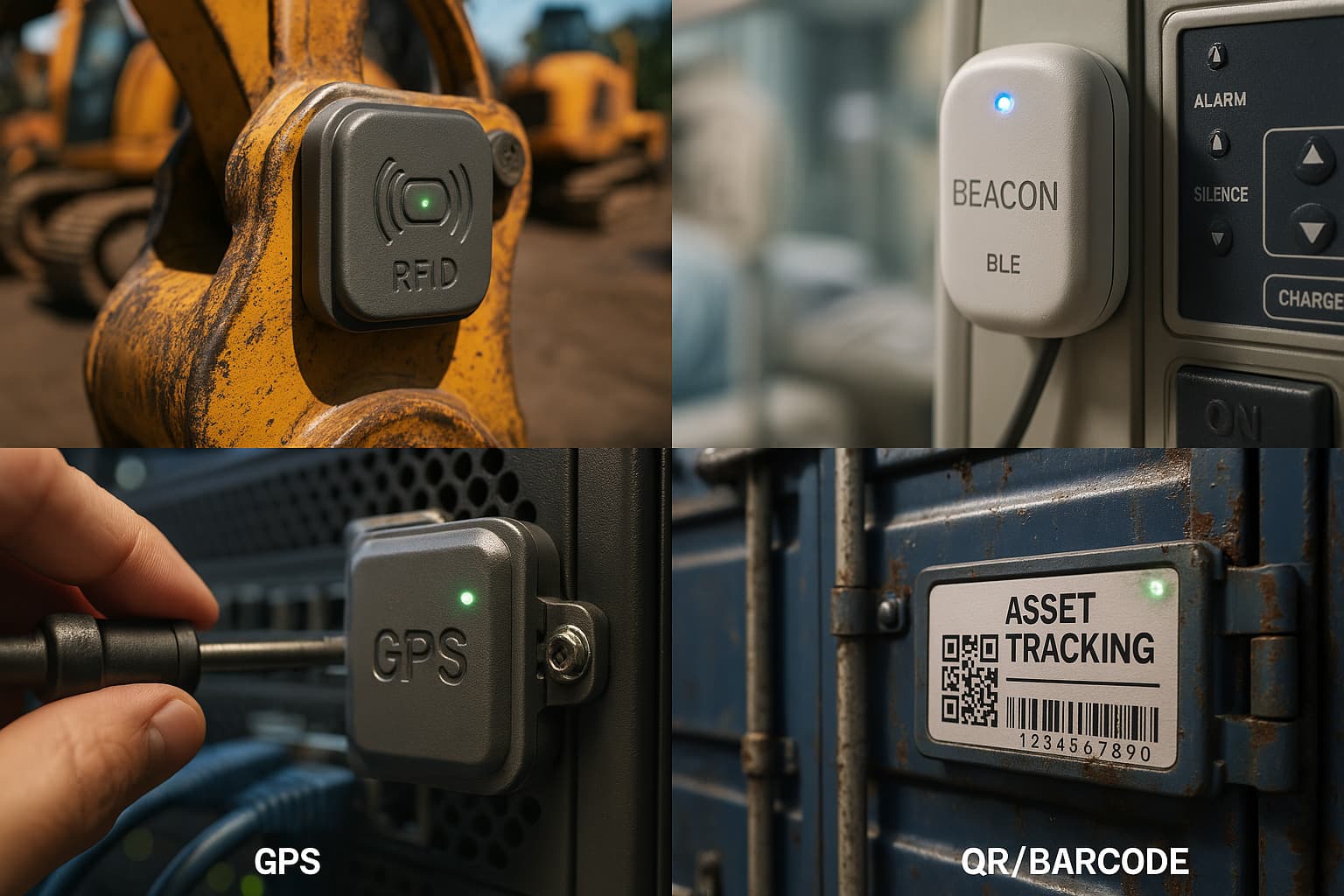
| Feature | Passive RFID | Active RFID | BLE Beacons | GPS Tracker | Apple Find My (Airpinpoint) |
|---|---|---|---|---|---|
| Tag cost | $0.10-3 | $25-100+ | $15-40 | $50-200 | $29 |
| Monthly fee | None (tags) | None (tags) | $2-10/tag | $10-30/tag | $11.99/mo (unlimited tags) |
| Infrastructure | Readers + antennas ($10K-100K+) | Dense reader grid ($50K+) | Gateways ($200-500 each) | None | None |
| Range | Inches to 30 ft | Up to 300 ft | Up to 300 ft | Global | Global (2.5B Apple devices) |
| Location type | Checkpoint only | Zone-level | Room-level | GPS coordinates | GPS coordinates |
| Real-time | No (scan-based) | Near real-time | Yes | Yes | Yes (hourly + on-demand) |
| Battery life | Indefinite | 3-5 years | 1-5 years | 1-4 weeks | 1+ year (CR2032) |
| Works outdoors | Only near readers | Only near readers | Only near gateways | Yes | Yes |
| Metal-friendly | Poor (needs special tags) | Poor (needs special tags) | Good | Good | Good |
| Best for | High-volume inventory | Indoor RTLS | Indoor zones | Vehicles, high-value | Tools, equipment, mixed fleets |
When RFID Makes Sense
RFID is the right technology when:
- You're tracking thousands of low-value items in a controlled environment (warehouse, retail store, distribution center)
- You need high-speed bulk scanning (receiving, shipping verification, cycle counts)
- Assets stay within your facility where readers are installed
- You have the IT infrastructure and budget to install and maintain readers ($10K-100K+)
- Checkpoint data is sufficient (you need to know what passed through a door, not where something is right now)
When BLE or Apple Find My Makes More Sense
Skip RFID and use a network-based tracker when:
- Assets move between sites or operate in the field (job sites, customer locations, vehicles)
- You need real-time location, not just checkpoint data
- You're tracking hundreds of assets, not tens of thousands (the per-tag economics flip at scale)
- You can't install infrastructure at every location where assets travel
- You're tracking metal tools and equipment that interfere with RF signals
- Budget matters and you need to be operational in days, not months
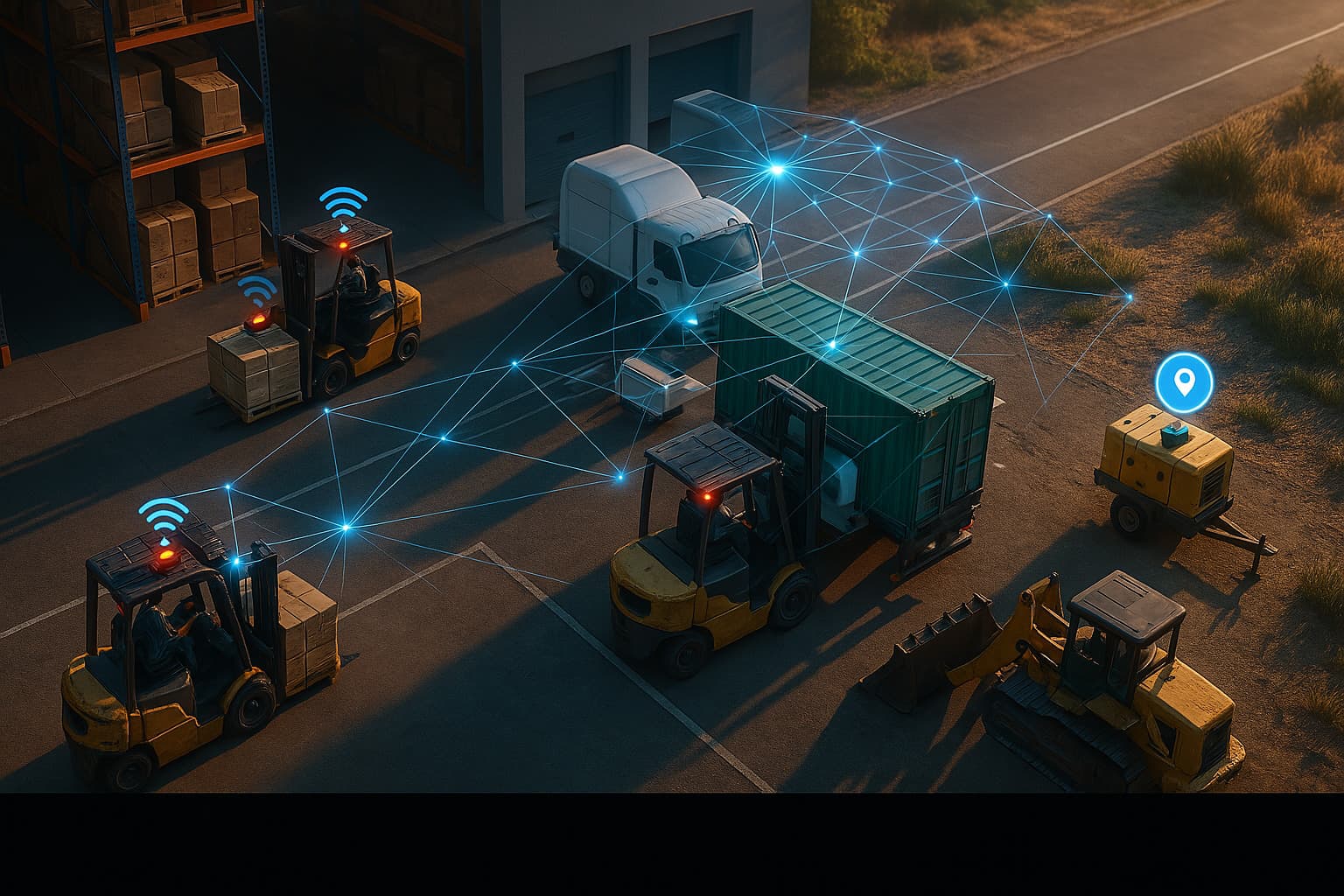
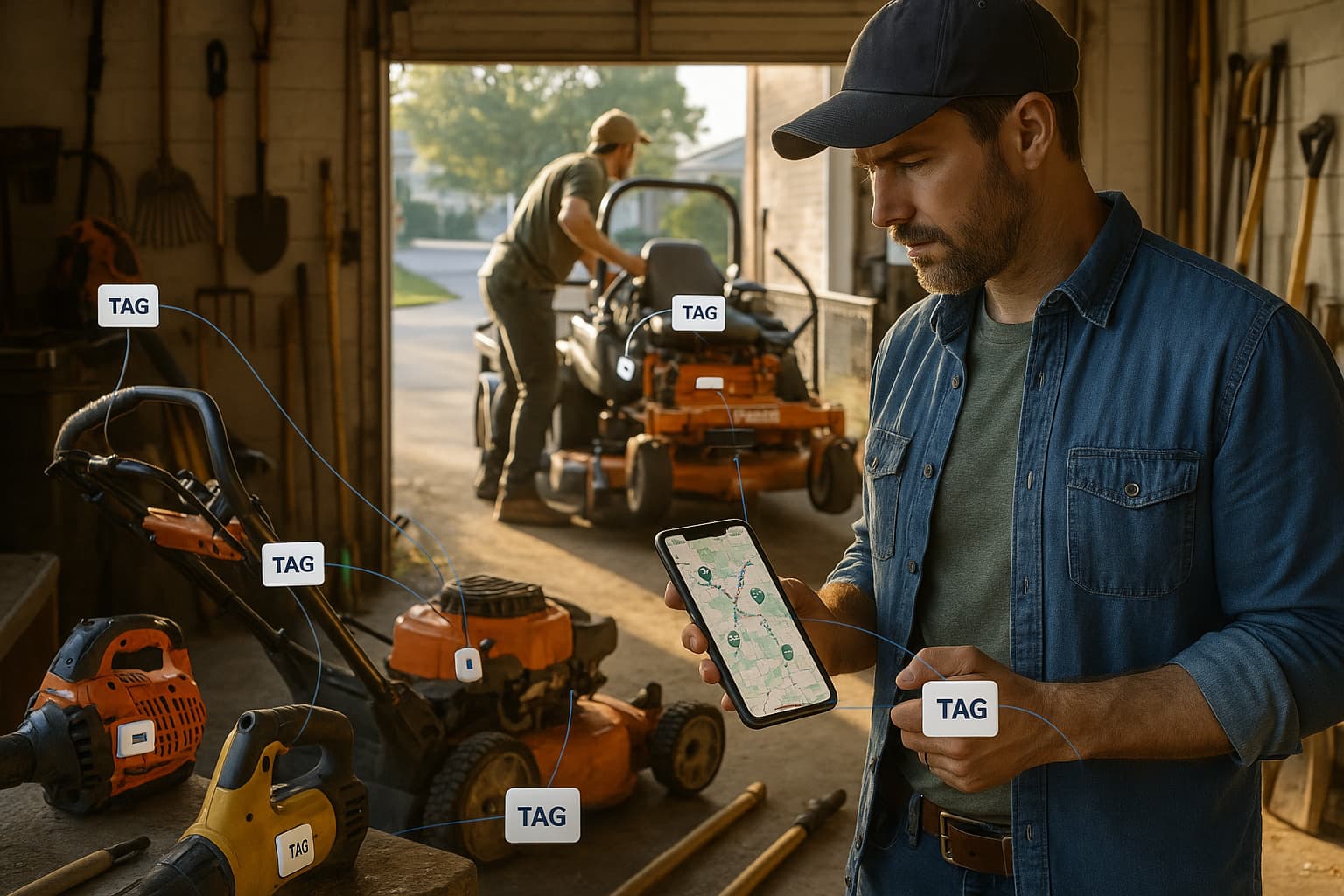
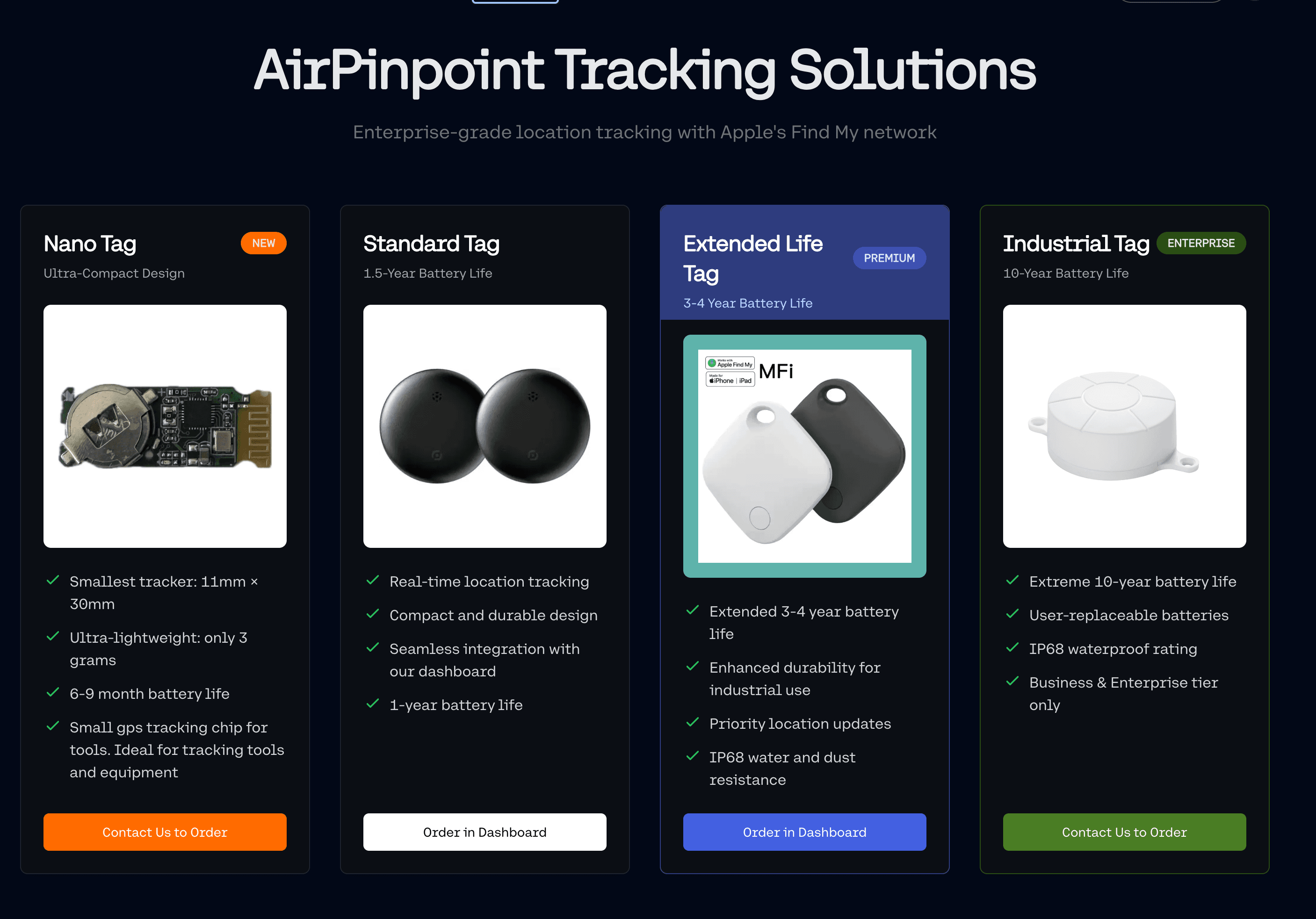
Airpinpoint uses Apple Find My compatible tags that cost $29 each. There are no readers to install, no antennas to cable, no middleware to configure. Every iPhone, iPad, and Mac in the world acts as a detection point. That's 2.5 billion devices providing location updates wherever your assets go.
RFID tells you an asset passed a checkpoint. Airpinpoint tells you where it is right now.
For businesses tracking tools across job sites, equipment across a region, or vehicles across a fleet, that difference matters. You get GPS-level location data, geofence alerts, and a web dashboard for $11.99/month, with zero infrastructure investment.
Getting Started
If you're evaluating RFID for asset tracking, start by answering two questions:
- Do your assets stay in one facility? If yes, RFID may be a good fit. If assets move between sites, you need network-based tracking.
- Do you need real-time location or checkpoint data? If checkpoint data is enough (inventory counts, shipping verification), RFID excels. If you need to find an asset right now, you need BLE or Find My.
For most businesses tracking equipment, tools, and vehicles across multiple locations, Airpinpoint provides better visibility at lower cost than RFID. Start a free trial to see your assets on a map within minutes, no infrastructure required.
 Our Solution